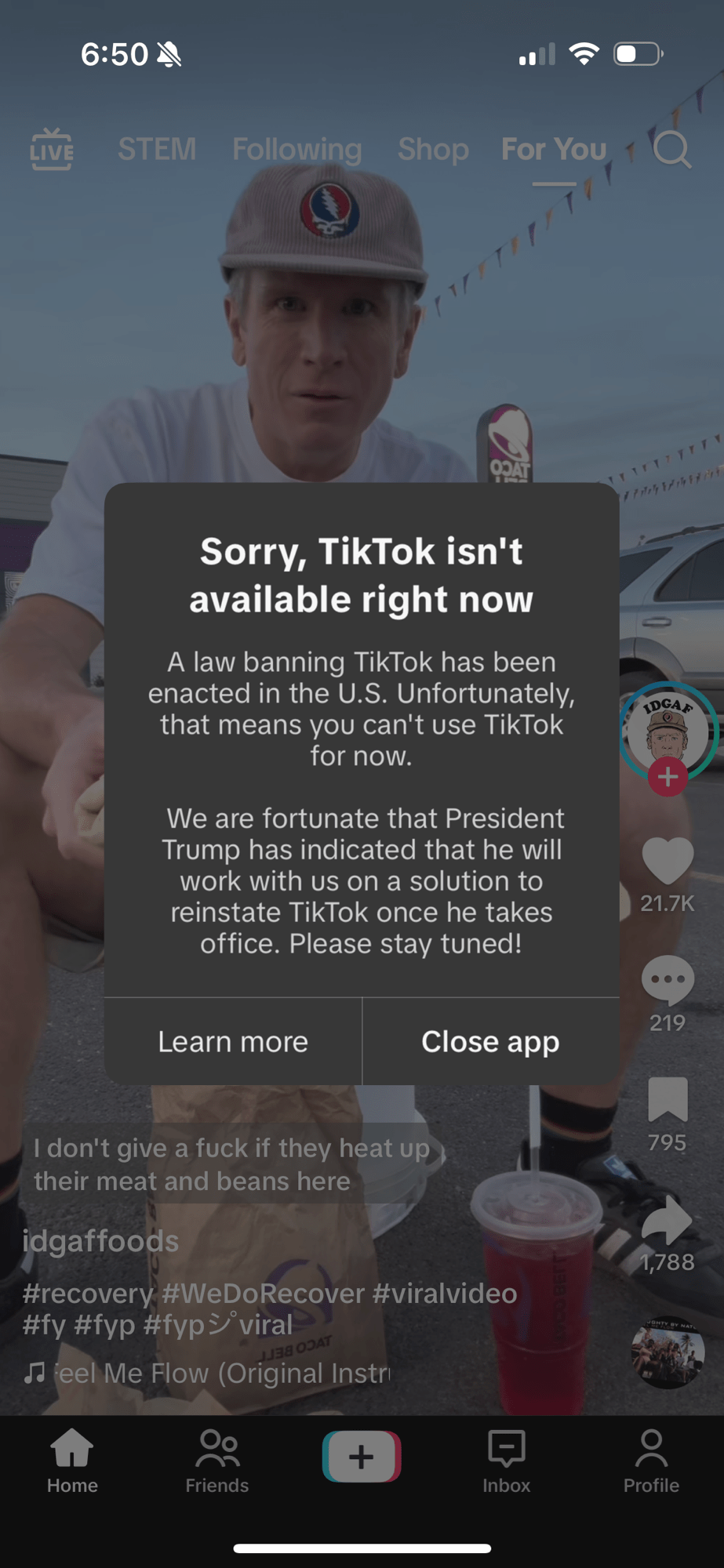
1/19/2025
On January 19, 2025, the United States implemented a ban on the social media platform TikTok, following the enactment of the Protecting Americans from Foreign Adversary Controlled Applications Act (PAFACA). This legislation mandates that applications owned by entities from designated foreign adversaries, such as TikTok’s Chinese parent company ByteDance, must divest their U.S. operations or face prohibition. The Supreme Court upheld this law, citing national security concerns.
Background of the Ban
PAFACA, signed into law in April 2024, provided companies like ByteDance a 270-day window to divest their U.S. operations. Failure to do so would result in the removal of their applications from U.S. app stores and the shutdown of related services. As ByteDance did not complete the divestiture within the stipulated timeframe, TikTok became inaccessible in the U.S. on January 19, 2025.
National Security Concerns
The U.S. government’s primary concern centers on the potential for the Chinese government to access sensitive data collected by TikTok, posing a threat to national security. While TikTok and ByteDance have consistently denied these allegations, the Supreme Court ruled that the government’s interest in protecting national security justified the enforcement of PAFACA.
Impact on Users and the Tech Industry
With over 170 million monthly users in the U.S., TikTok’s shutdown has significantly impacted content creators and consumers. Many users have expressed concerns over the loss of community and income streams. Some have begun migrating to alternative platforms, including other applications with similar functionalities.
Future Developments
President-elect Donald Trump has indicated a willingness to grant a 90-day extension for TikTok to finalize a divestiture, potentially allowing the platform to resume operations in the U.S. However, as of now, TikTok remains inaccessible pending further developments.
 Cyber-1.TECH
Leave a comment